
The Andes and the Himalayas are two of the largest mountain ranges on Earth. The following is a comparison between these two mountain ranges. Let’s read.
Andes vs Himalayas
Size comparison
The easiest way to understand the Andes vs Himalayas dynamic is through a simple rule of thumb: The Andes win on length, while the Himalayas win on height.
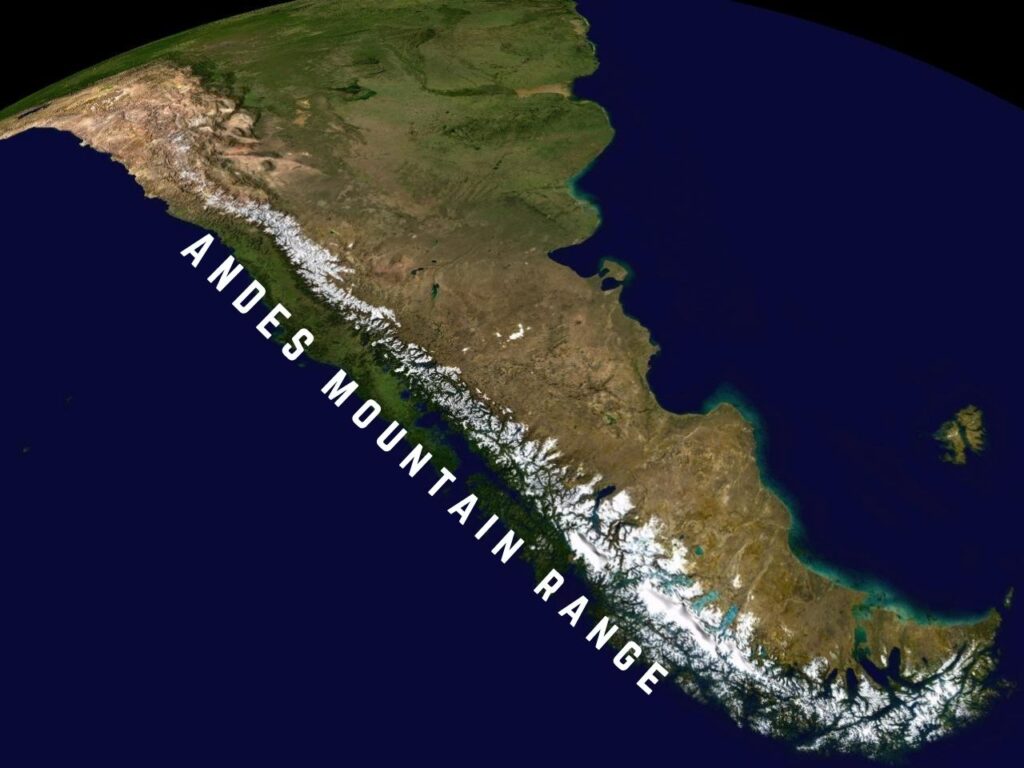
Stretching over an incredible 7,000 kilometers (4,350 miles), the Andes form an unbroken wall along the entire western edge of South America. They pass through seven countries: Argentina, Bolivia, Chile, Colombia, Ecuador, Peru, and Venezuela. The Andes are by far the longest continental mountain range on Earth.
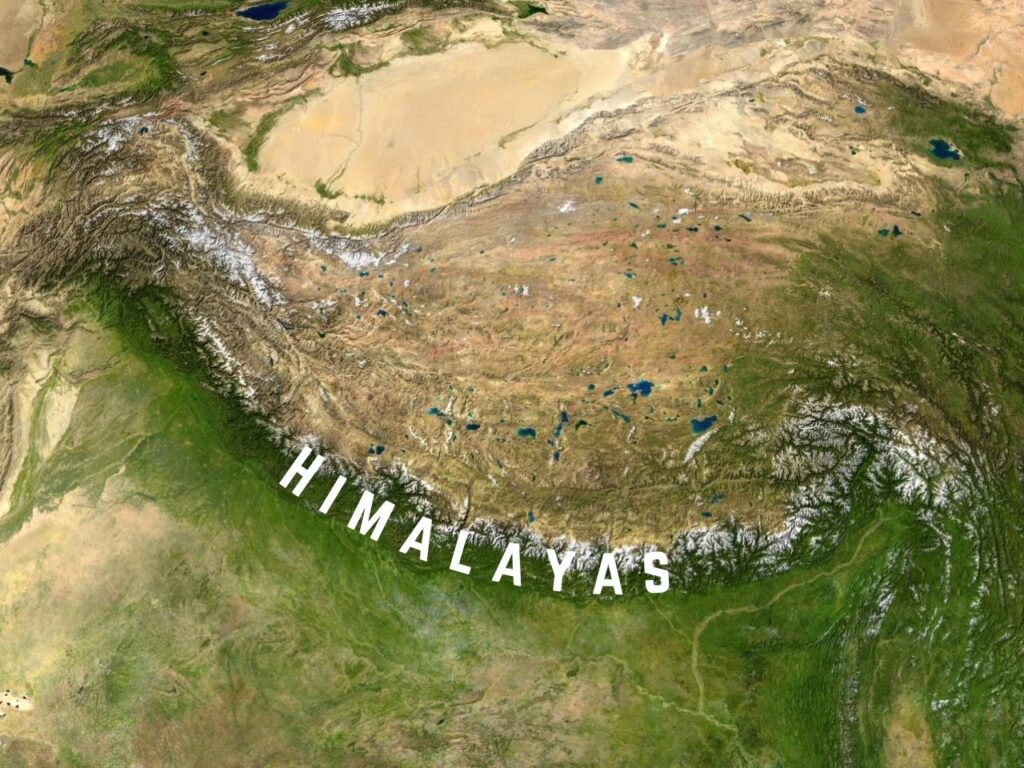
The Himalayas are shorter, stretching about 2,400 kilometers (1,500 miles) across five countries: Bhutan, China, India, Nepal, and Pakistan. However, they are much higher. In fact, the Himalayas are the highest mountain range on Earth above sea level. They boast the highest concentration of ultra-prominent peaks on the planet, including 14 mountains that rise above the legendary 8,000-meter “eight-thousander” mark. The highest mountain peak on Earth, Mount Everest (8,849 m/29,032 ft), is part of the Himalayas.
Andes vs Himalayas: Highest peak
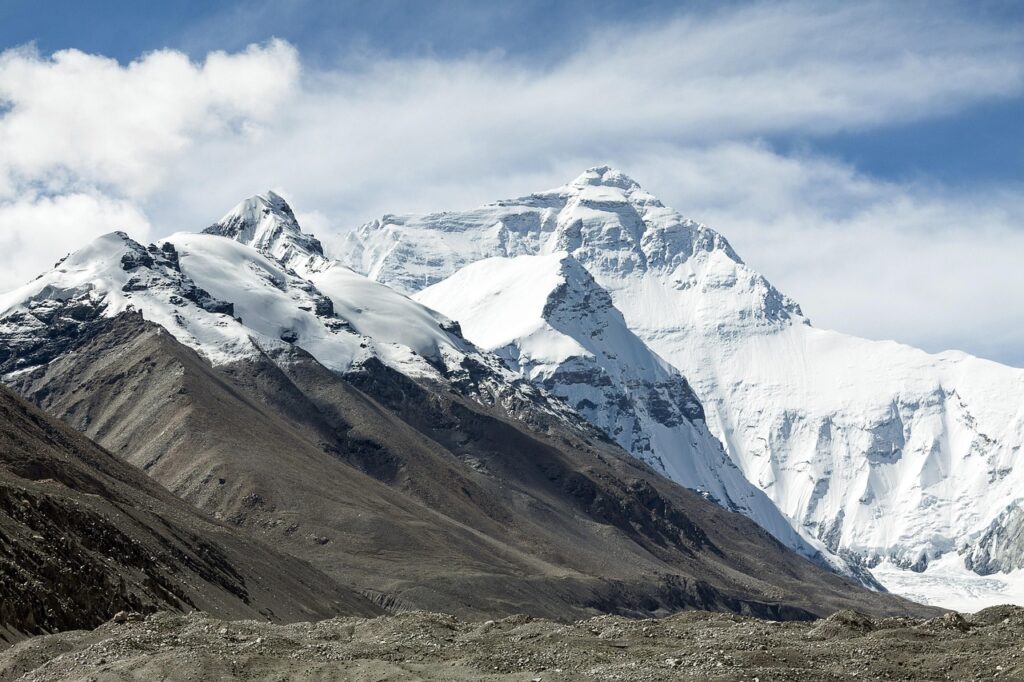
The highest mountain peak in the Andes is Aconcagua, located in Argentina. The peak has an elevation of 6,961 meters (22,838 ft). The highest peak in the Himalayas, Mount Everest (8,849 m/29,032 ft), dwarfs Aconcagua by more than 6,000 ft. Mount Everest is located on the border between Nepal and China.
Formation
How the Andes formed (Subduction)
The Andes are the result of oceanic-continental convergence. For millions of years, the dense oceanic Nazca Plate has been sliding (subducting) beneath the lighter South American Plate. This continuous compression forces the continental crust upward while also generating large pockets of magma beneath the surface. As a result, the Andes contain many volcanoes and are home to some of the highest active volcanoes on Earth.
How the Himalayas formed (Collision)
The Himalayas, on the other hand, are the result of a continental-continental collision. About 40 to 50 million years ago, the Indian tectonic plate crashed directly into the Eurasian plate. Because both plates were light and buoyant, neither could sink. Instead, they smashed together like two rushing cars, crumpling the earth and rock upward at an extreme vertical angle.
Did You Know?
Because the Indian Plate is still moving northward into Asia, the Himalayas are still actively growing.
(Also read: Major mountain ranges in the world)
Earthquake and volcanic activity
The Andes and the Himalayas are both tectonically active mountain ranges. Both regions are highly earthquake-prone. Active volcanism, however, is characteristic of the Andes, while the Himalayas are largely non-volcanic.
Climate
The Himalayas and the Andes both have diverse climate zones. In the Himalayas, climate differences are influenced mainly by altitude and the monsoon. In the Andes, climate differences are influenced by altitude, latitude, and global wind patterns.
Since the Andes stretch across a long distance from north to south, you can find tropical rainforests in the northern Andes, cold and arid deserts in the central Andes region, and icy, wind-swept fjords in southern Patagonia.
The Himalayas act as a massive east-west barrier. They block the cold winter winds from Siberia from entering the Indian subcontinent and trap the moisture-laden summer monsoon winds. This creates a stark contrast: a lush environment on the southern side and a high-altitude cold desert on the northern rain-shadow side.
Comparison table
| Andes | Himalayas | |
|---|---|---|
| Countries | Argentina, Bolivia, Chile, Colombia, Ecuador, Peru, and Venezuela | Bhutan, China, India, Nepal, and Pakistan |
| Length | over 7,000 kilometers (4,350 miles) | approximately 2,400 kilometers (1,500 miles) |
| Highest peak | Aconcagua (6,961 m/22,838 ft) | Mount Everest (8,849 m/29,032 ft) |
| Number of peaks > 7,000 m | 0 | more than 100 |
| Formation | oceanic-continental subduction | continental-continental collision |
| Major cities | Bogota, La Paz, Lima, Quito, Cusco, etc. | Kathmandu, Shimla, Thimphu, Darjeeling, Srinagar, etc. |
| Active volcanoes | Yes | No |
Frequently Asked Questions (FAQs)
Which mountain range is longer, the Andes or the Himalayas?
The Andes are much longer than the Himalayas. They stretch for over 7,000 km (4,300 miles) along the western edge of South America, making them the longest continental mountain range in the world.
Which mountain range is higher, the Andes or the Himalayas?
The Himalayas are higher than the Andes. Mount Everest in the Himalayas is the highest mountain on Earth at 8,849 meters (29,032 ft).
How many countries do the Andes Mountains pass through?
The Andes Mountains pass through seven countries in South America: Argentina, Bolivia, Chile, Colombia, Ecuador, Peru, and Venezuela.
Which mountain range has the highest volcanoes?
The Andes contain many active and dormant volcanoes and are home to some of the highest volcanoes in the world. Ojos del Salado, located in the Andes on the border of Argentina and Chile, is the highest volcano in the world. It reaches an elevation of 6,893 meters (22,615 ft).