
Banyan trees are mainly found in tropical and subtropical regions. The species native to India is known as the Indian banyan, or Ficus benghalensis. It is also commonly called bargad, vad, or vat in India. The banyan tree is known for its distinctive aerial roots, which grow downward from its branches and can eventually develop into additional trunks. Here are some interesting facts about the banyan tree.
Interesting Facts About The Banyan Tree
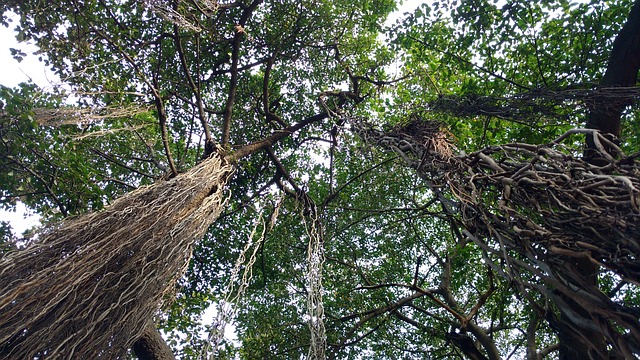
• Indian banyan trees are among the largest trees in the world in terms of canopy area. Some of these trees are so enormous that their size is difficult to imagine until you see them in person. Thimmamma Marrimanu, a banyan tree in Anantapur district of Andhra Pradesh state, is widely regarded as one of the largest trees in the world by canopy area. Its canopy covers an area of around 19,100 square metres (4.7 acres).
Several other large and famous banyan trees in India have canopy areas exceeding 15,000 square metres, including Kabirvad in Gujarat state and the Great Banyan in West Bengal state.
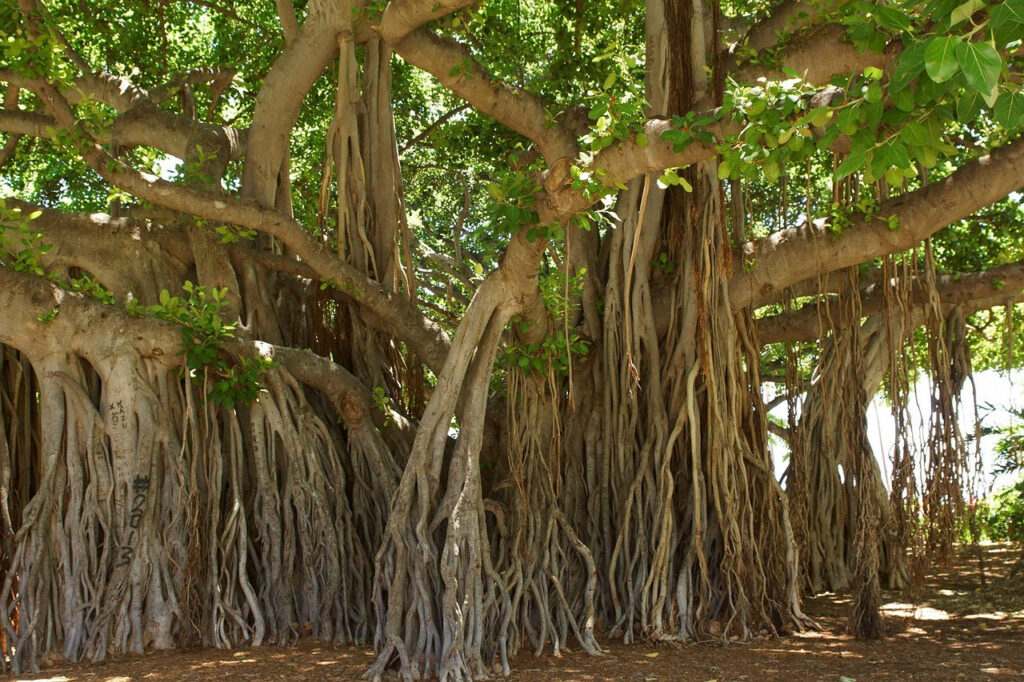
• The aerial roots of a banyan tree grow downward from its branches and, once they reach the ground, develop into supporting roots and eventually become additional trunks. In large, old banyan trees, it can be difficult to identify the original trunk.
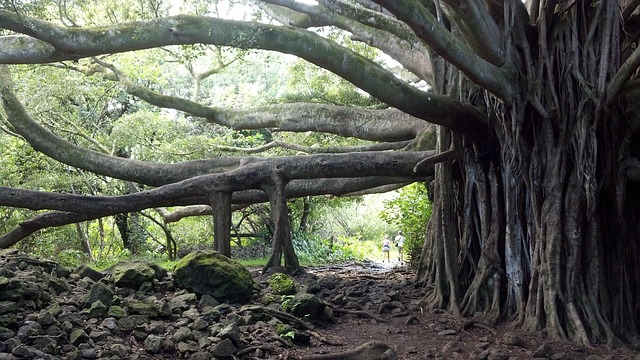
• Banyan trees play an important role in supporting ecosystems by providing food and shelter for a wide variety of organisms. In some ecosystems, they can function as keystone species because their fruits provide an important food source for birds, bats, and other animals. Their large branches and extensive canopies also provide nesting and roosting sites for many birds and other wildlife. Their trunks, branches, and roots support diverse communities of microorganisms, including fungi and bacteria, many of which live within plant tissues as endophytes.
• The banyan tree has great cultural, religious, and medicinal significance in India, Nepal, and several other Asian countries. It is considered sacred in Hinduism and Buddhism, which is one reason banyan trees are often found near temples and other religious sites.
• Lord Krishna is sometimes depicted as a divine child resting on a banyan leaf, floating on the cosmic waters.
• There are also festivals dedicated to the banyan tree, such as Vat Purnima, a Hindu festival observed mainly in parts of India and Nepal.
• In Ayurveda, different parts of the banyan tree have traditionally been used for a variety of purposes. Preparations made from its leaves have been traditionally used for digestive and skin-related conditions, while its roots have been used in traditional remedies for oral health and other ailments.
(Disclaimer: Traditional uses of plants should not be considered a substitute for medical treatment. Any medicine should be taken only as prescribed by a qualified physician.)
Read more