
Let’s compare Caspian Sea and Lake Superior, two large lakes both in terms of surface area and water volume.
Caspian Sea vs Lake Superior: Which is larger?
The Caspian Sea is the largest lake in the world by both surface area and water volume. Although it is called a “sea” because of its size and saline water, it is technically a lake. Lake Superior is the world’s largest freshwater lake by surface area, while Lake Baikal is the largest freshwater lake by water volume.
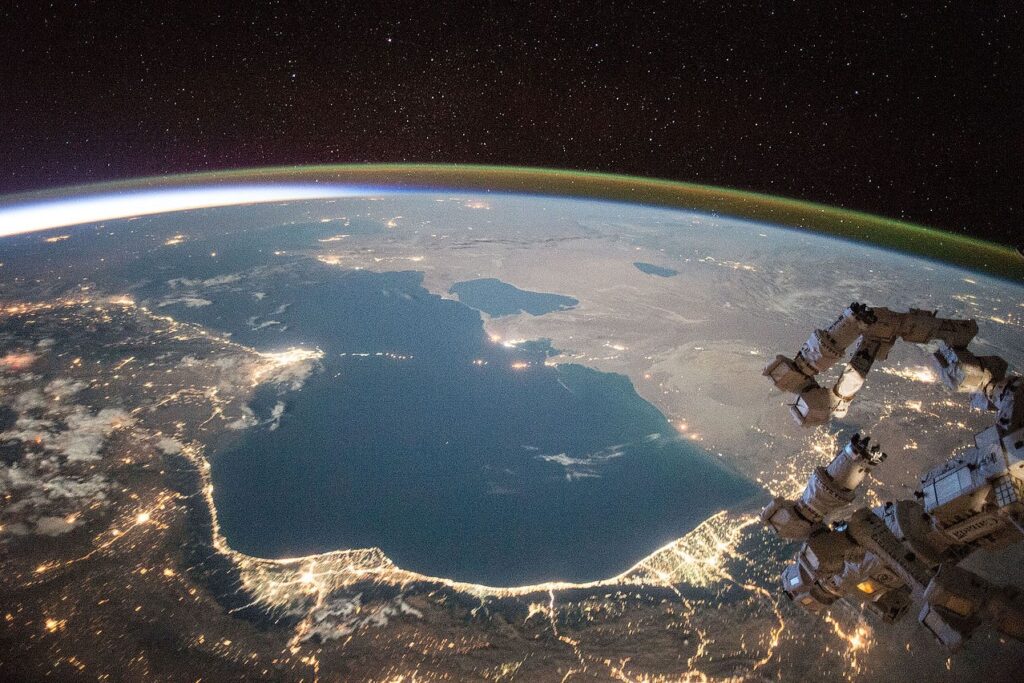
The Caspian Sea covers an area of approximately 371,000 sq km (143,244 sq miles), while Lake Superior has a surface area of about 82,100 sq km (31,700 sq miles). The Caspian Sea is more than 4.5 times as large as Lake Superior by surface area.
Since the Caspian Sea is much deeper than Lake Superior, the difference in water volume is even more dramatic. The Caspian Sea contains approximately 78,200 cubic kilometers of water, while Lake Superior holds about 12,100 cubic kilometers. This means the Caspian Sea contains roughly 6.5 times as much water as Lake Superior.
(Also read: Lake Baikal vs Lake Superior: Which is Larger?)
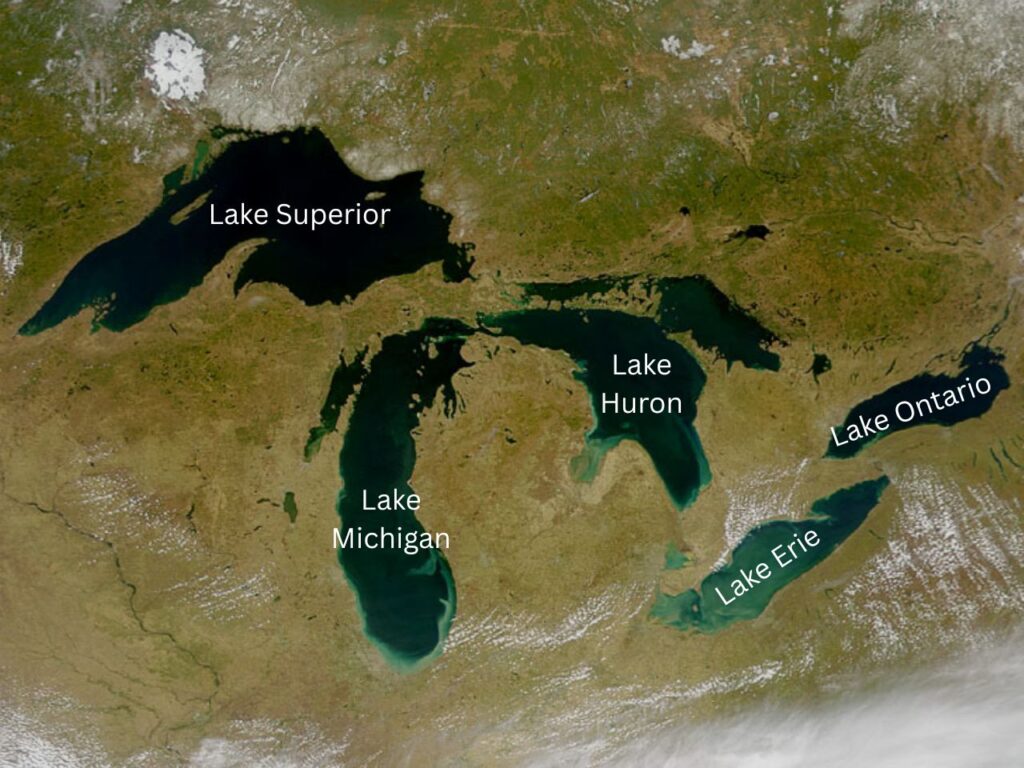
Comparison table
| Caspian Sea | Lake Superior | |
|---|---|---|
| Countries | Azerbaijan, Iran, Kazakhstan, Russia, and Turkmenistan | Canada and United States |
| Water type | Brackish | Fresh |
| Area | approximately 371,000 sq km (143,244 sq miles) | approximately 82,100 sq km (31,700 sq miles) |
| Volume | approximately 78,200 km³ | approximately 12,100 km³ |
| Maximum depth | 1,025 meters (3,360 feet) | 406 meters (1,333 feet) |
| Average depth | approximately 210 meters (690 feet) | approximately 147 meters (483 feet) |