
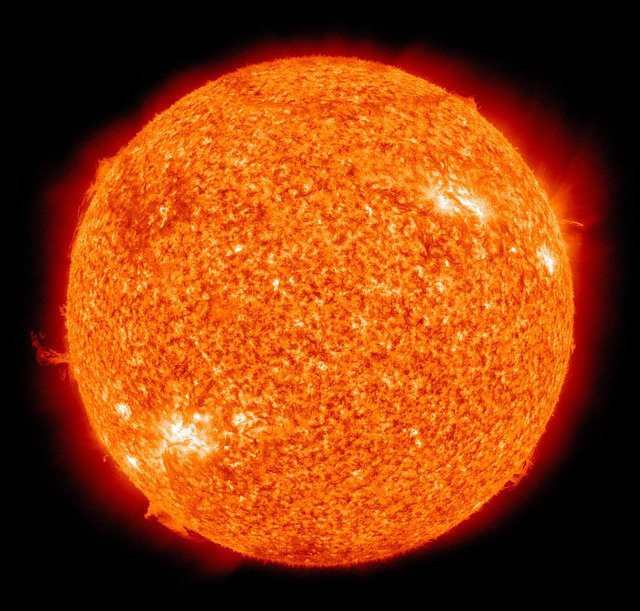
The system of objects like planets, moons, asteroids, etc. that are gravitationally bound directly or indirectly to the sun is known as the solar system. The following are 10 quick facts about the solar system. Let’s read.
10 quick facts about the Solar System
1. There are 8 planets and 456 known moons in our solar system.
Planets and their number of moons
| Planet | Number of moons |
|---|---|
| Mercury | 0 |
| Venus | 0 |
| Earth | 1 |
| Mars | 2 |
| Jupiter | 115 |
| Saturn | 293 |
| Uranus | 29 |
| Neptune | 16 |
| Total | 456 |
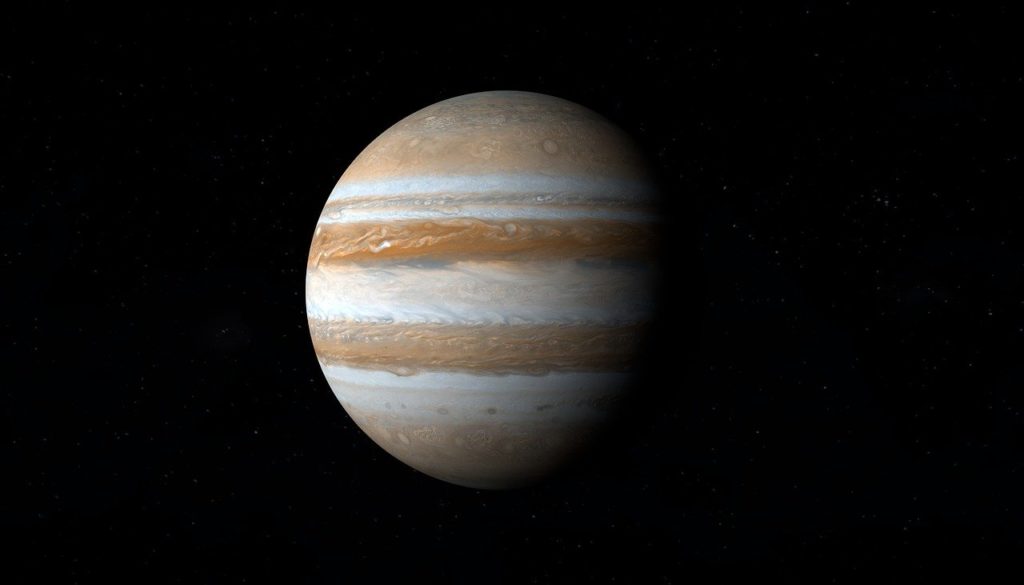
2. Jupiter is the largest planet in the solar system. It has a diameter of approximately 142,984 km/88,846 miles. Jupiter is so big that more than 1,300 Earths could fit inside it.
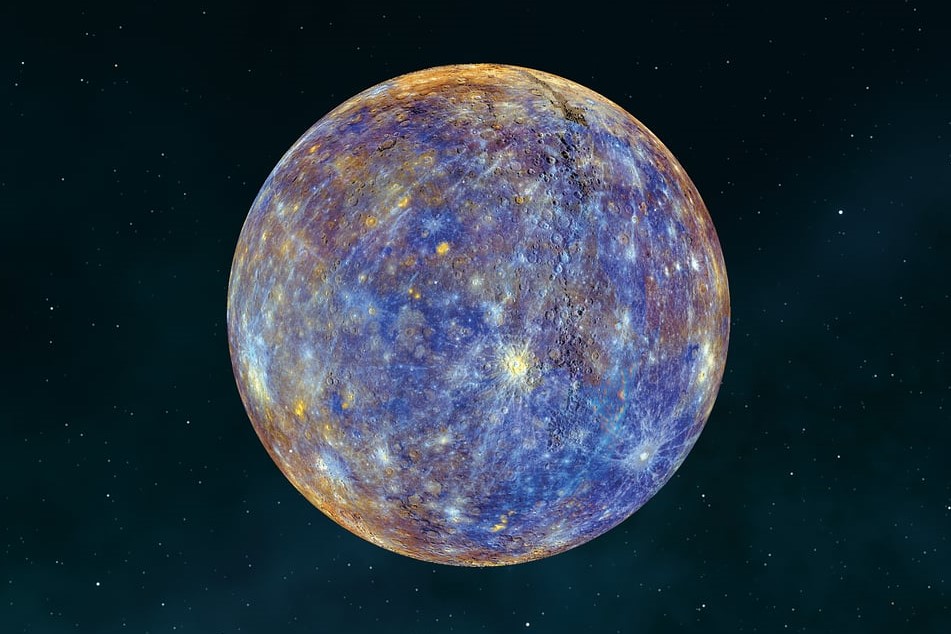
Mercury is the smallest planet in the solar system. It is the closest planet to the sun and has a diameter of approximately 4,880 km/3,032 miles. About 18 Mercurys would fit inside the Earth.
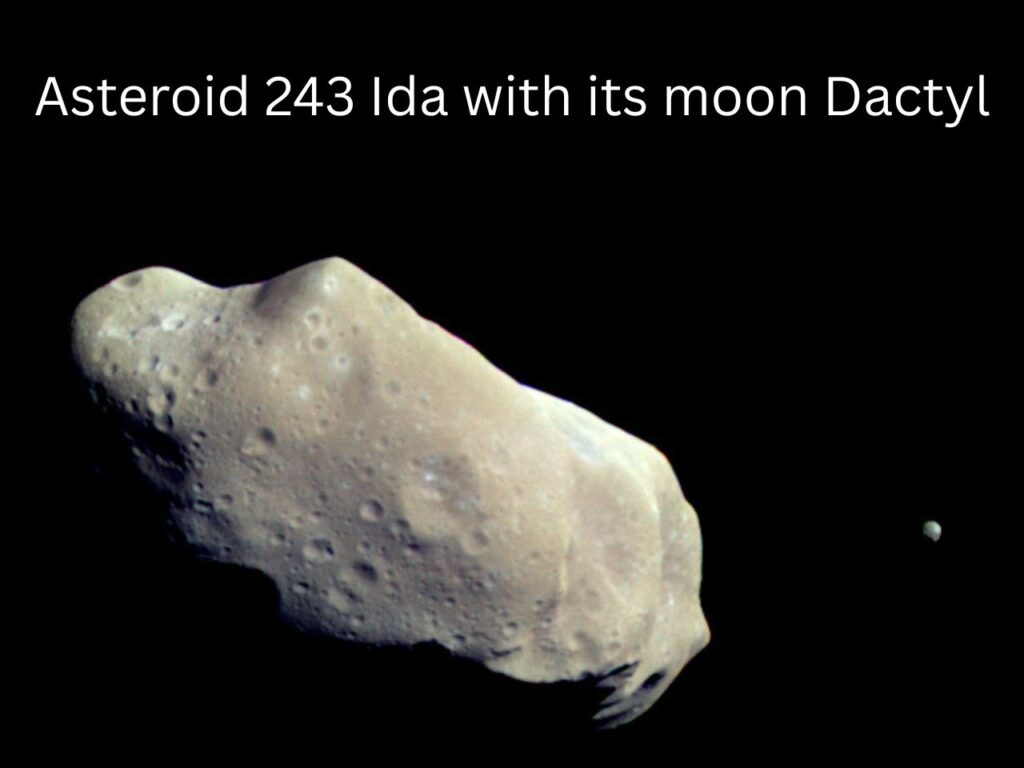
3. Asteroids can have moons. This is asteroid 243 Ida with its moon Dactyl.
4. Ganymede (the largest moon of Jupiter) and Titan (the largest moon of Saturn) are larger the Mercury in diameter.
- Diameter of Ganymede = 5,268 km
- Diameter of Titan = 5,150 km
- Diameter of Mercury = 4,879 km
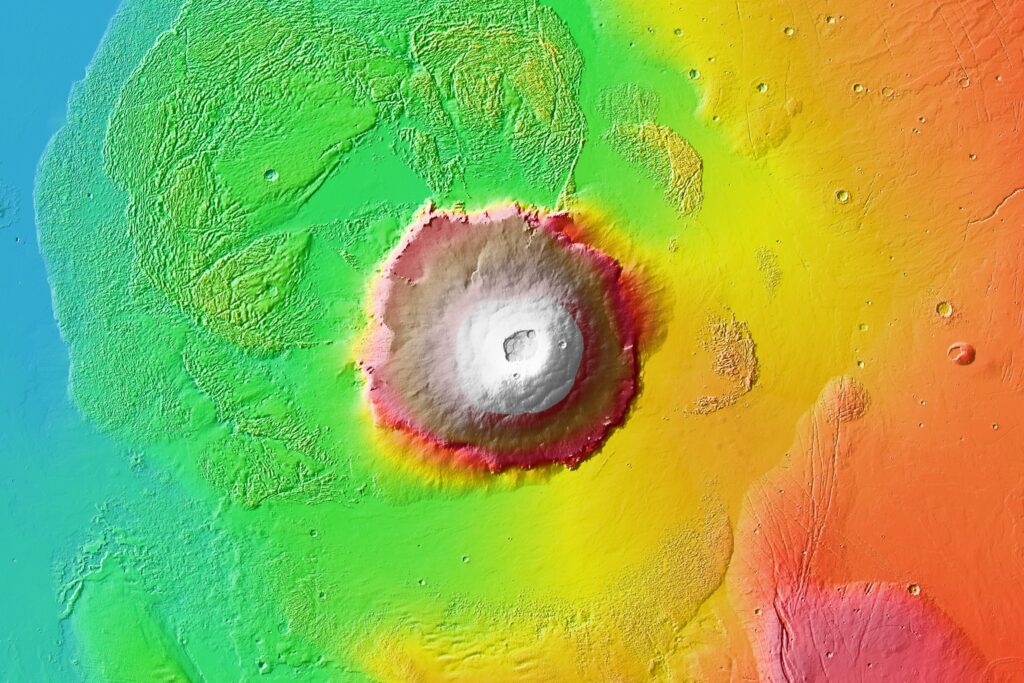
5. Olympus Mons on Mars, with an elevation of 21.9 km (13.6 miles), is about 2.5 times as high as Mount Everest. Mount Everest has an elevation of 8,849 m (5.5 miles). Olympus Mons is actually a shield volcano.
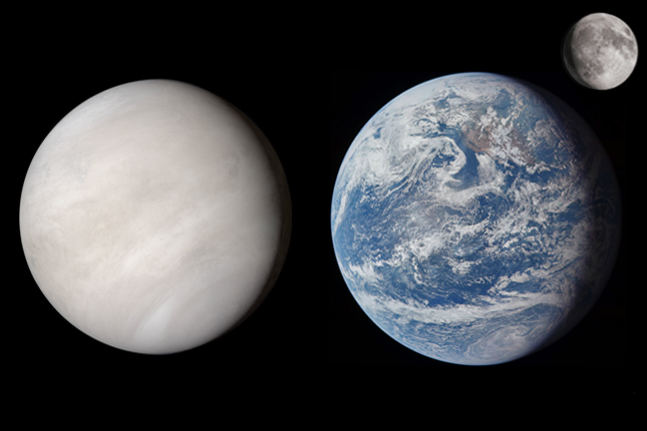
6. Venus is the hottest planet in the solar system although it is not the closest planet to the Sun. The temperatures on Venus can reach above 460°C ( 860°F).
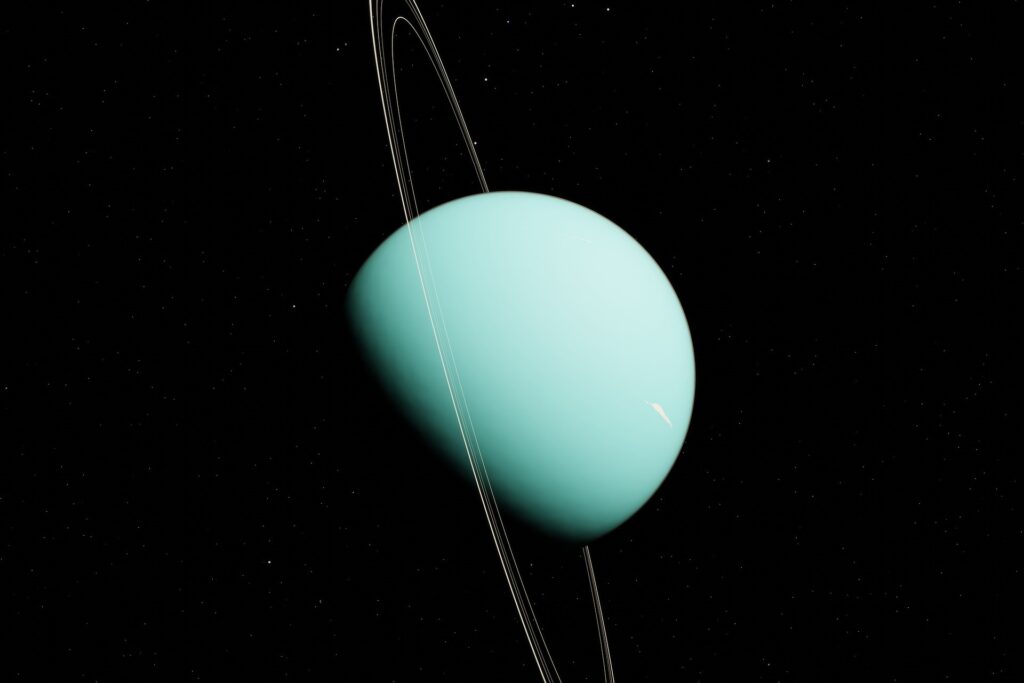
7. Uranus is the coldest planet in the solar system. The lowest measured temperature on Uranus was -371 degrees Fahrenheit/-224 degrees Celsius.
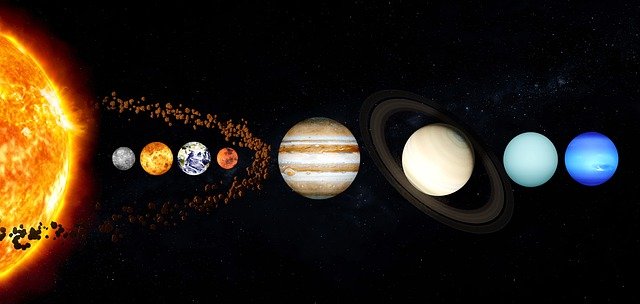
8. The asteroid belt between Mars and Jupiter contains between 1.1 and 1.9 million asteroids with diameters larger than 1 kilometer (0.62 miles).
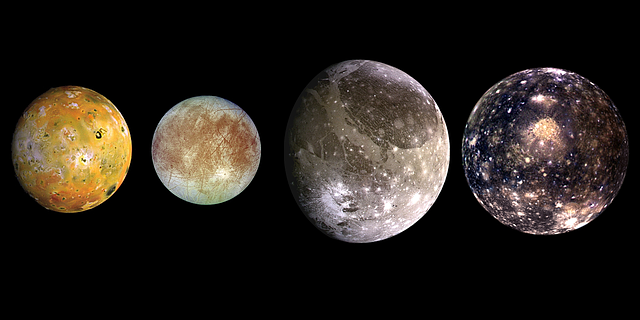
9. Saturn is the planet with the highest number of known moons, 293. Jupiter has 115, Uranus has 29, and Neptune has 16 known moons.
10. The solar system began forming about 4.6 billion years ago.
Extra
Dwarf planets
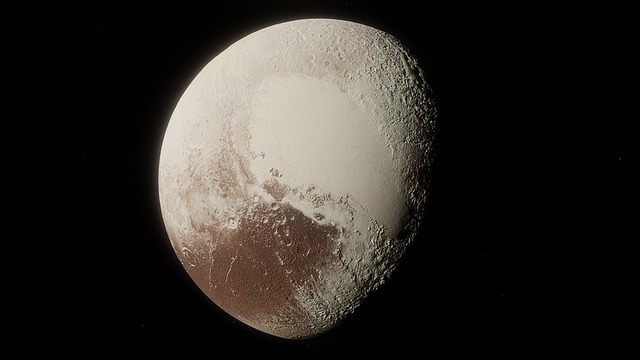
There are many dwarf planets in the solar system, The well-known ones are Pluto and Ceres. Dwarf planets as the name suggests are relatively smaller than normal planets. These planets have not cleared their orbital paths.
Planets with no moons
Mercury and Venus are the planets with no known moons.
Size of Pluto
Pluto has a diameter of about 2,370 km meaning it is even smaller than Earth’s moon which has a diameter of about 3,475 km.
Types of planets
There are 4 terrestrial planets – Mercury, Venus, Earth, and Mars; and 4 gas giants – Jupiter, Saturn, Uranus, and Neptune. Uranus and Neptune are also ice giants. Gas giants do not have a true well-defined surface. Terrestrial planets, on the other hand, have a rocky surface.
Frequently Asked Questions (FAQs)
1. Name the planets in order.
Answer – Mercury, Venus, Earth, Mars, Jupiter, Saturn, Uranus, and Neptune
2. Name the 4 terrestrial planets.
Answer – Mercury, Venus, Earth, and Mars
3. Name the 2 ice giants.
Answer – Uranus and Neptune
4. Where is the asteroid belt located in the solar system?
Answer – between Mars and Jupiter
Read more