
The Moon is the fifth-largest natural satellite in the Solar System and the brightest object in our night sky. But have you ever wondered what the distance between the Earth and the Moon really is?
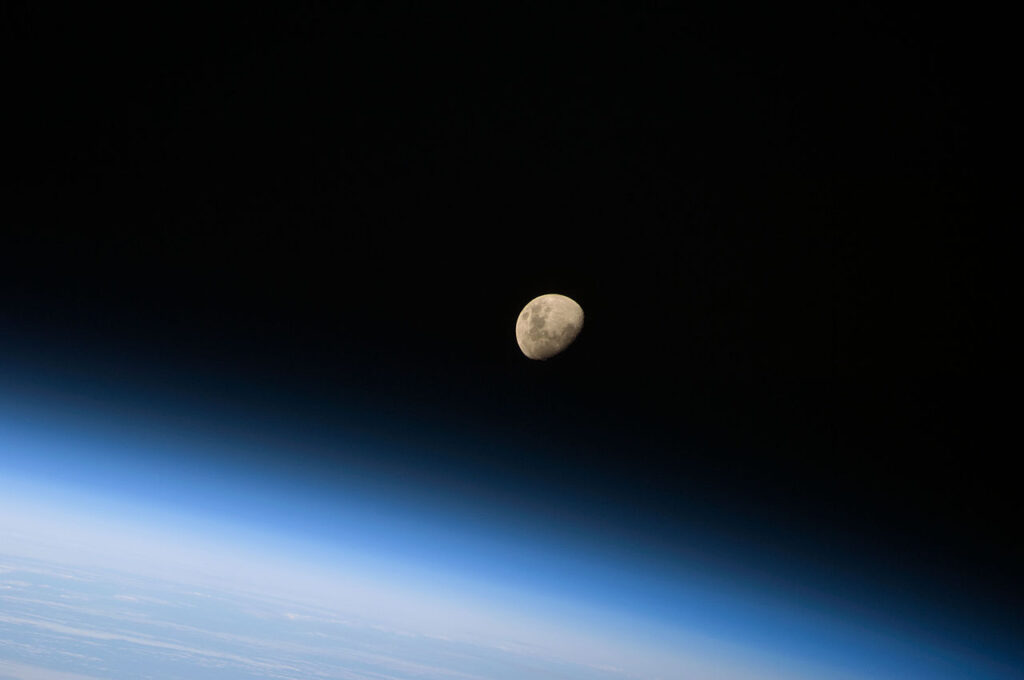
How far is the moon?
The Moon is the closest celestial body to Earth, yet it is still quite far away. The average distance between the Earth and the Moon is about 384,400 km (238,855 miles). To put this into perspective, this distance is roughly 86 times the distance between New York and Las Vegas.
- Average distance between the Earth and the Moon in km: 384,400 km
- Average distance between the Earth and the Moon in miles: 238,855 miles
The distance between the Earth and the Moon is not constant. The Moon moves in an elliptical orbit around the Earth, with the Earth not located at the exact center of the ellipse. At one point, known as perigee, the Moon is closest to the Earth. The point at which the Moon is farthest from the Earth is known as apogee.
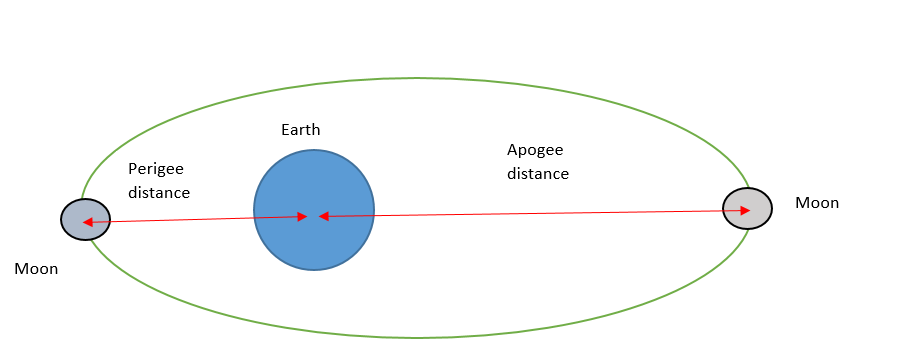
In addition, the distances of apogee and perigee are not fixed and vary slightly over time. The average distance of perigee from Earth is about 363,300 km (226,000 miles), while the average distance of apogee from Earth is about 405,500 km (252,000 miles).
Supermoon
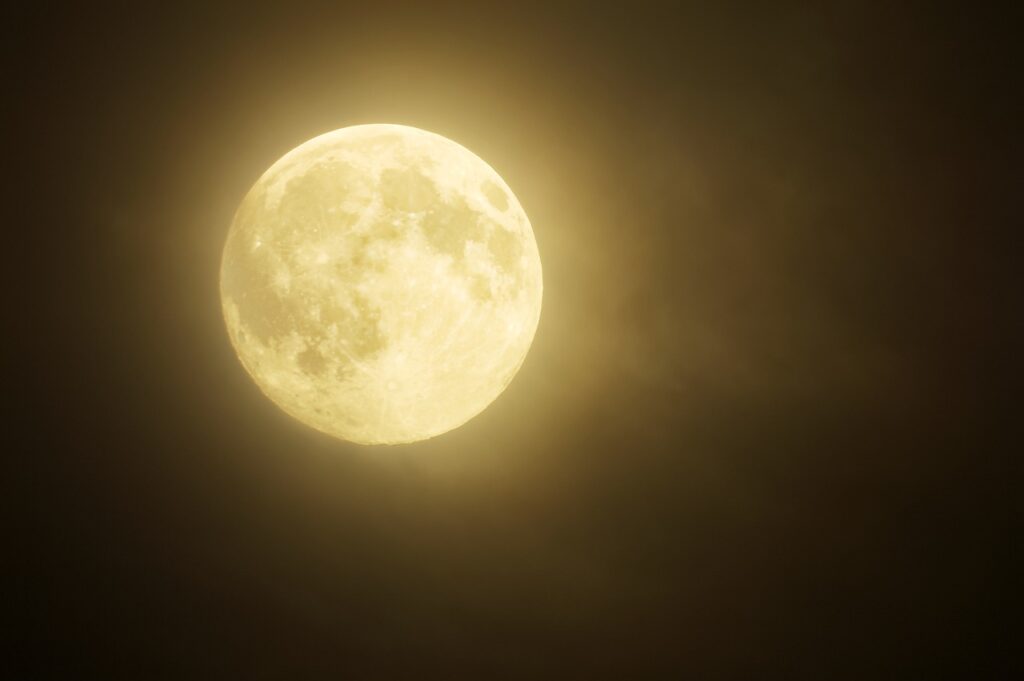
The Moon is called a “supermoon” when it is in the new moon or full moon phase and is close to the perigee position. When a full moon occurs near perigee, it appears slightly larger and brighter.
The occurrence of a supermoon gives photographers a great opportunity to showcase their skills. However, viewers should not be misled by images in which the Moon appears unusually large compared to its surroundings. Such photos are typically taken using telephoto lenses from a long distance, creating a compressed perspective that makes the Moon appear larger relative to foreground objects. This is not an accurate representation of how the Moon appears to the naked eye.
Perigean spring tide
Spring tides occur during the new moon and full moon phases, when the gravitational forces of the Sun and the Moon align to produce a greater tidal range. The tidal range is the difference in height between high tide and low tide.
When a spring tide coincides with the Moon being near perigee, it is known as a perigean spring tide. These tides produce higher than normal tidal ranges.
Frequently Asked Questions
The average distance is approximately 384,400 kilometers (238,855 miles).
Perigee is the point in the Moon’s orbit where it is closest to Earth (about 363,300 km), while Apogee is the point where it is farthest away (about 405,500 km). This fluctuation is why the Moon’s size appears to change slightly in the sky.
About 30 Earths can fit between the Earth and the Moon.
Yes, the Moon is slowly moving away from the Earth. Each year, it moves about 4 cm farther.
Read more