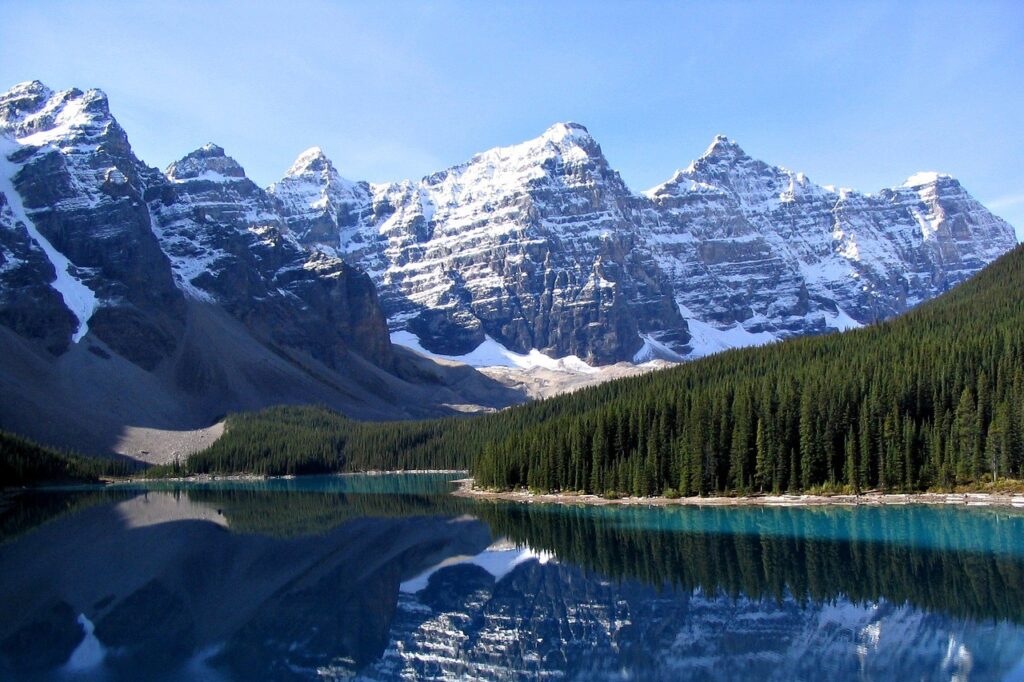
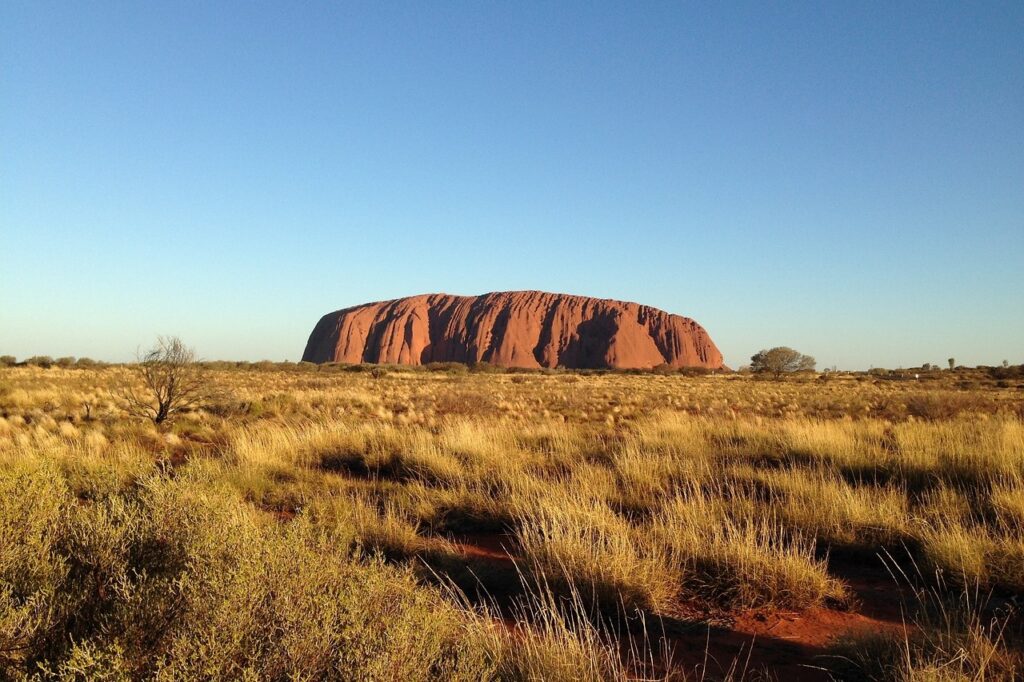
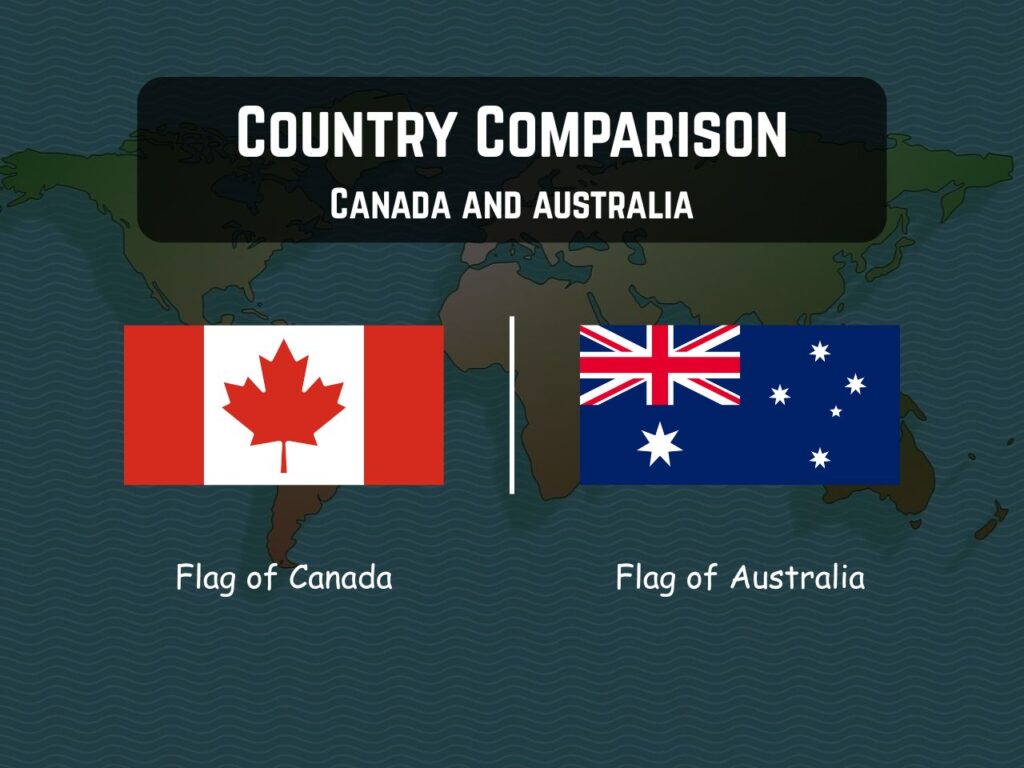
The following is a comparison between Canada and Australia, two large countries of the world. Let’s read.
Canada and Australia – country comparison
GDP
Canada has a larger GDP, while Australia has a higher GDP per capita. Both countries have advanced economies dominated by the service sector. The table below compares the GDP and GDP per capita of the two countries.
| 2025 (IMF) | Canada | Australia |
|---|---|---|
| Currency | Canadian Dollar | Australian Dollar |
| GDP (nominal, USD) | $2.32 trillion | $1.84 trillion |
| GDP per capita (nominal, USD) | $55.76 thousand | $66.35 thousand |
| GDP (PPP, international $) | $2.79 trillion | $2 trillion |
| GDP per capita (PPP, international $) | $67.01 thousand | $72.13 thousand |
Source: International Monetary Fund (IMF)
Population
Canada has a larger population than Australia. Both Canada and Australia have low population densities. The table below compares the population, total fertility rate (TFR), and the percentage of the population in different age groups in the two countries.
| 2025 estimate | Canada | Australia |
|---|---|---|
| Population | 40.1 million | 27 million |
| Population aged 0-14 | 15% | 18% |
| Population aged 15-64 | 65% | 64% |
| Population aged 65 and older | 20% | 18% |
| Total fertility rate, per woman | 1.3 | 1.6 |
Source: United Nations Population Fund (UNFPA)
Life
| Canada | Australia | |
|---|---|---|
| Life expectancy at birth (2023/UN) | 82.63 | 83.92 |
| Human Development Index rank (2023) | 16th | 7th |
| Human Development Index value | 0.939 | 0.958 |
Overview
Both Canada and Australia are large countries. Canada is the second-largest country in the world by total area, while Australia is the sixth-largest. Canada is roughly 1.3 times larger than Australia.
| Canada | Australia | |
|---|---|---|
| Area | approximately 10 million sq km | approximately 7.7 million sq km |
| Area rank | 2nd | 6th |
| Population | 40.1 million (2025 estimate) | 27 million (2025 estimate) |
| Capital city | Ottawa | Canberra |
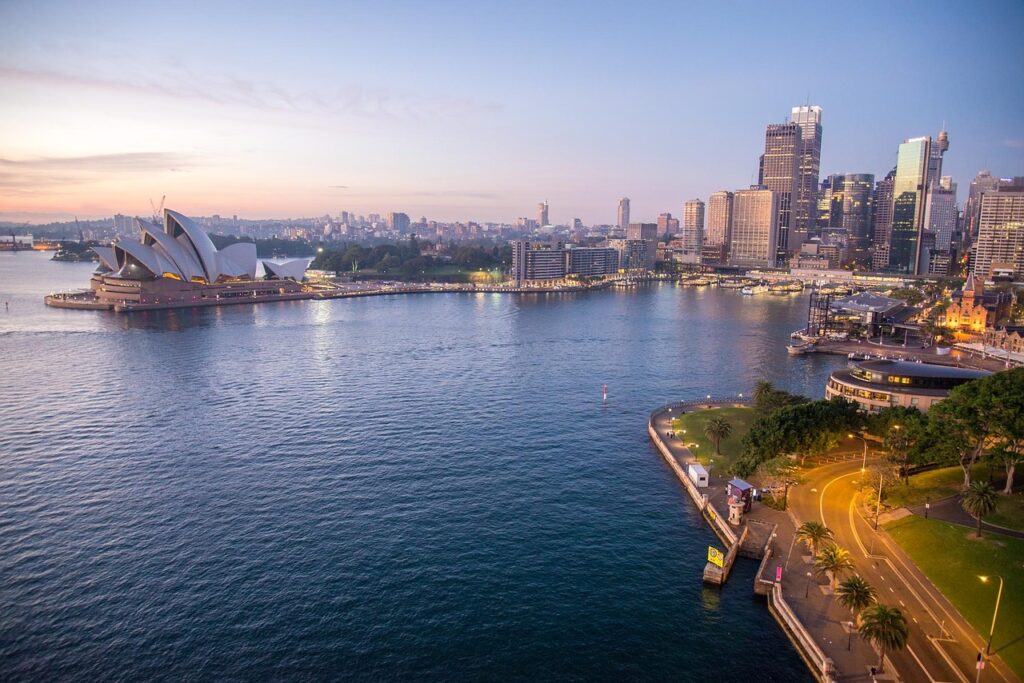
| Largest city | Toronto | Sydney |
| Most spoken language | English | English |
| Most popular sport | Ice hockey | Australian rules football |
Geography
| Canada | Australia | |
|---|---|---|
| Region | North America | Oceania |
| Forest cover (2023) | 39.5% | 17.4% |
| Total number of time zones | 6 | 9 |
| Highest mountain | Mount Logan (5,959 m/19,551 ft) | Mount Kosciuszko (2,228 m/7,310 ft) (highest peak on mainland Australia); Mawson Peak (2,745 m/9,006 ft) (highest peak in Australian territory) |
| Largest island | Baffin Island (507,450 sq km) | Mainland Australia |
| Largest lake | Lake Superior (shared with the US); Great Bear Lake (entirely within Canada) | Kati Thanda-Lake Eyre |
| Major rivers | Mackenzie, Yukon, Saint Lawrence, Nelson, Slave, etc. | Murray River, Murrumbidgee River, Darling River, Lachlan River, Cooper Creek, Warrego River, etc. |
(Also read: Russia vs Canada | Russia and Canada – country comparison)
National Symbols
| Canada | Australia | |
|---|---|---|
| National animal | Beaver and the Canadian horse | Kangaroo |
| National tree | The maple tree | The golden wattle |
| National bird | The gray jay | Emu |
Tourism
| Canada | Australia | |
|---|---|---|
| International tourist arrivals | 19.9 million (2024) | 8.3 million (2024) |
| Number of UNESCO World Heritage Sites | 22 | 21 |
| Popular places to visit | Toronto, Montreal, Niagara Falls, Ottawa, Banff National Park, Vancouver, Quebec City, etc. | Melbourne, Sydney, Brisbane, Perth, Adelaide, Gold Coast, Great Barrier Reef, Uluru-Kata Tjuta National Park, etc. |