
A desert is any region on Earth that receives very little precipitation. Most climatologists and geomorphologists classify regions that receive less than 250 mm (10 inches) of average annual precipitation as deserts. This article explores the three largest deserts in the world. The largest desert on Earth may come as a surprise to many people.
The largest deserts in the world
Most people picture a barren, sandy landscape with cacti when they think of a desert. But as the definition says, the desert is any region with less than 250 mm of precipitation. The polar regions of Earth are also deserts as they receive very little rain or snow.
1. Antarctic Desert (The largest desert)
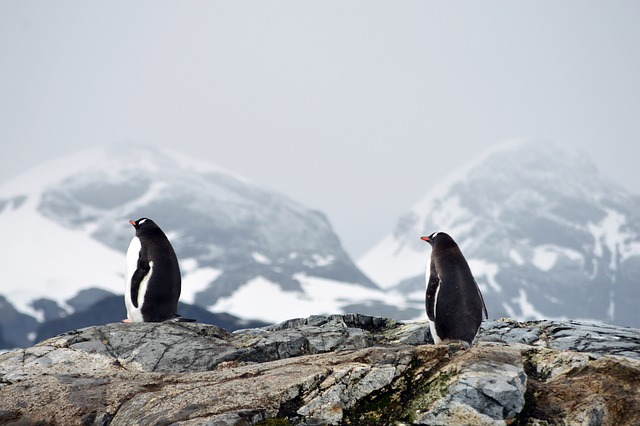
The Antarctic Desert is the largest desert in the world. It receives less than 200 mm of precipitation each year, that too mostly in coastal regions. The Antarctic Desert has an area of roughly 14.2 million square kilometers. Despite these extreme conditions, Antarctica is home to a variety of specially adapted wildlife, including penguins, seals, and seabirds along its coasts.
(Also read: 18 interesting facts about Antarctica)
2. Arctic Desert (The second largest desert)
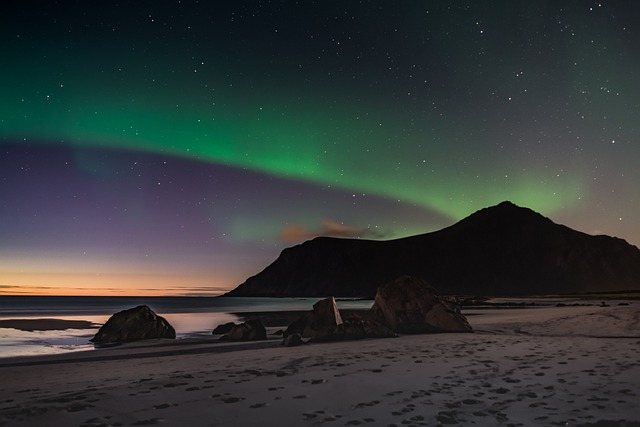
The Arctic Desert is the second-largest desert in the world, covering approximately 13.9 million square kilometers. It spans the Arctic region, including northern parts of Alaska (United States), Canada, Greenland, Iceland, Norway, Russia, and Sweden. Like all deserts, it receives very little precipitation, mostly in the form of snow. Despite its vast size, the Arctic has a very small human population, consisting mainly of Indigenous peoples who have lived in the region for thousands of years.
(Also read: Why is the South pole colder than the North pole?)
3. Sahara Desert (The largest hot desert)
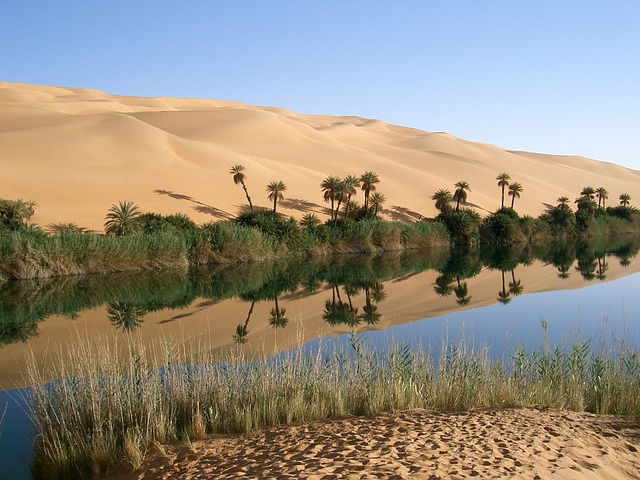
The Sahara Desert is the third-largest desert in the world, covering an area of roughly 9.2 million square kilometers. It is the world’s largest hot desert and stretches across much of North Africa. The desert extends into parts of Algeria, Chad, Egypt, Libya, Mali, Mauritania, Morocco, Niger, Sudan, Tunisia, and Western Sahara. Most parts of the Sahara receive less than 100 mm (4 inches) of precipitation annually, with some areas going for years without measurable rainfall. Despite its harsh conditions, the Sahara is home to a variety of specially adapted plants, animals, and human communities.
Frequently Asked Questions (FAQs)
Which is the largest desert in the world?
The Antarctic Desert is the largest desert in the world, covering an area of about 14.2 million square kilometers. It is classified as a cold desert because it receives extremely low annual precipitation.
Is Antarctica considered a desert?
Yes, Antarctica is scientifically classified as a polar desert. In geography, a desert is defined by the amount of precipitation it receives, not by its temperature.
Why is the Sahara not the largest desert?
The Sahara is not the largest desert overall because the Antarctic and Arctic polar deserts both cover a significantly larger geographic area. However, the Sahara holds the title of being the largest hot desert in the world, spanning roughly 9.2 million square kilometers.
What is the difference between a hot desert and a cold desert?
The primary difference is temperature and location, while both share the trait of low rainfall (less than 250 mm annually). Hot deserts, such as the Sahara, experience extremely high temperatures and are typically found in the subtropical regions around 20° to 30° north and south of the Equator. In contrast, cold deserts, such as the Antarctic Desert, have freezing temperatures and are located in the polar regions or at high altitudes
Read more