
Africa is the second-largest continent on Earth. A significant portion of it is covered by deserts. The three main deserts of Africa are the Sahara Desert, the Namib Desert, and the Kalahari Desert. Let’s learn the key features of these three major African deserts.
The three main deserts of Africa
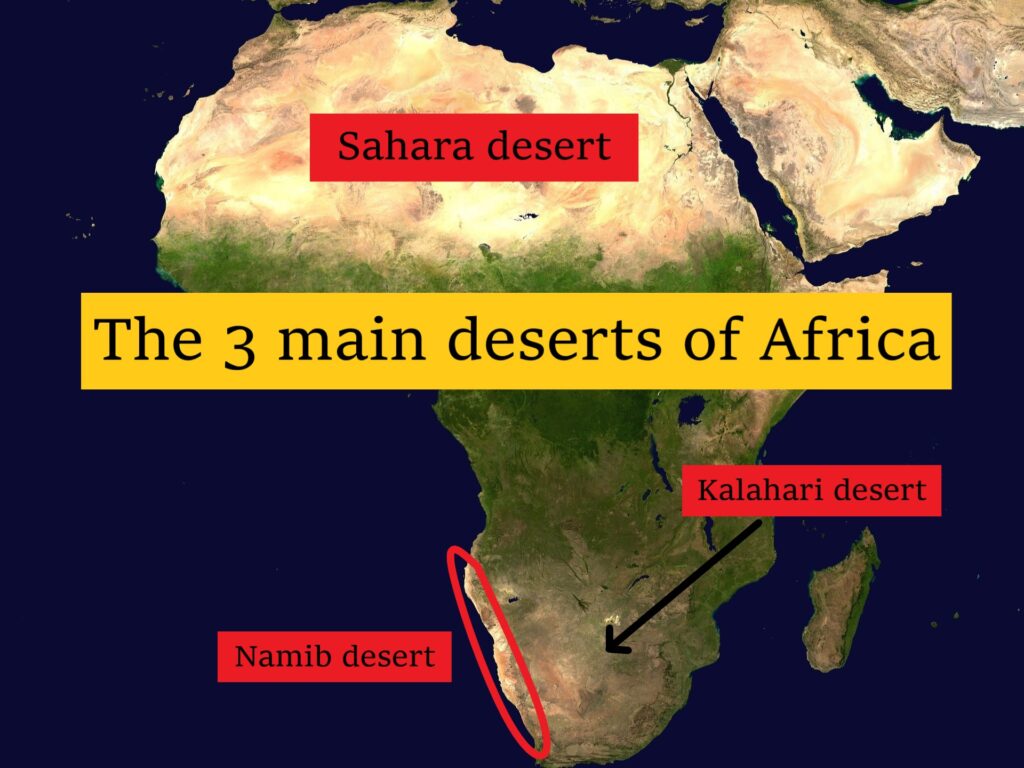
1. Sahara Desert
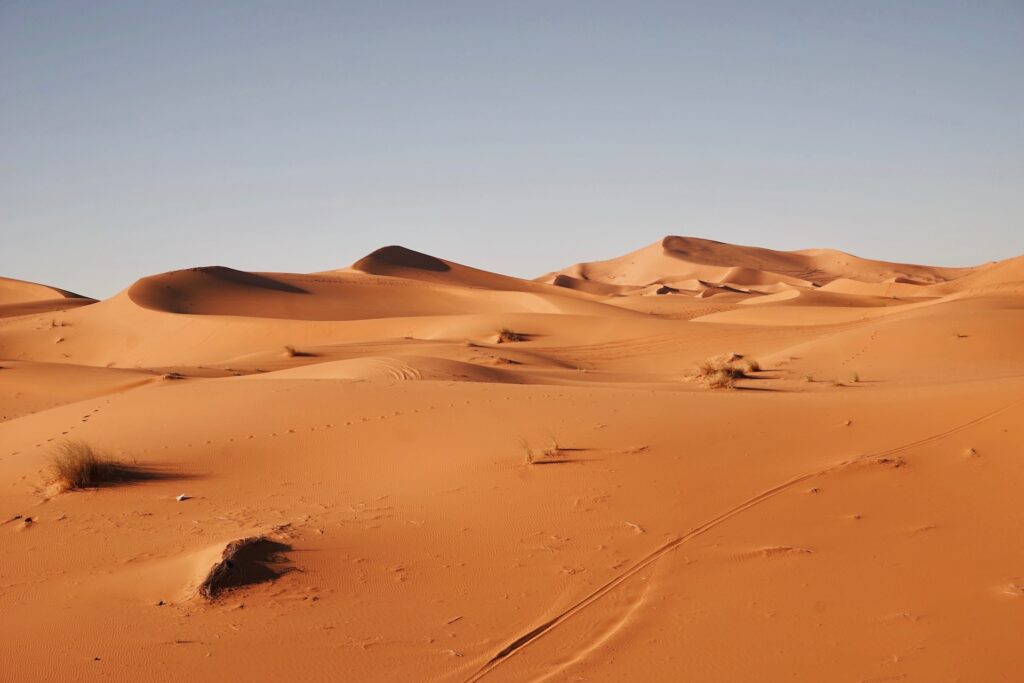
The Sahara Desert is the largest hot desert in the world and the third-largest desert overall, after the Antarctic and Arctic deserts. It spans over 9 million square kilometers and covers much of North Africa, extending across 11 countries: Algeria, Chad, Egypt, Libya, Mali, Mauritania, Morocco, Niger, Western Sahara (non-self-governing territory), Sudan, and Tunisia.
In many parts of the Sahara, temperatures can soar above 50°C (122°F). The average annual rainfall is only 3-4 inches. Despite the harsh climate, human habitation in Sahara desert dates back to thousands of years.
2. Namib desert
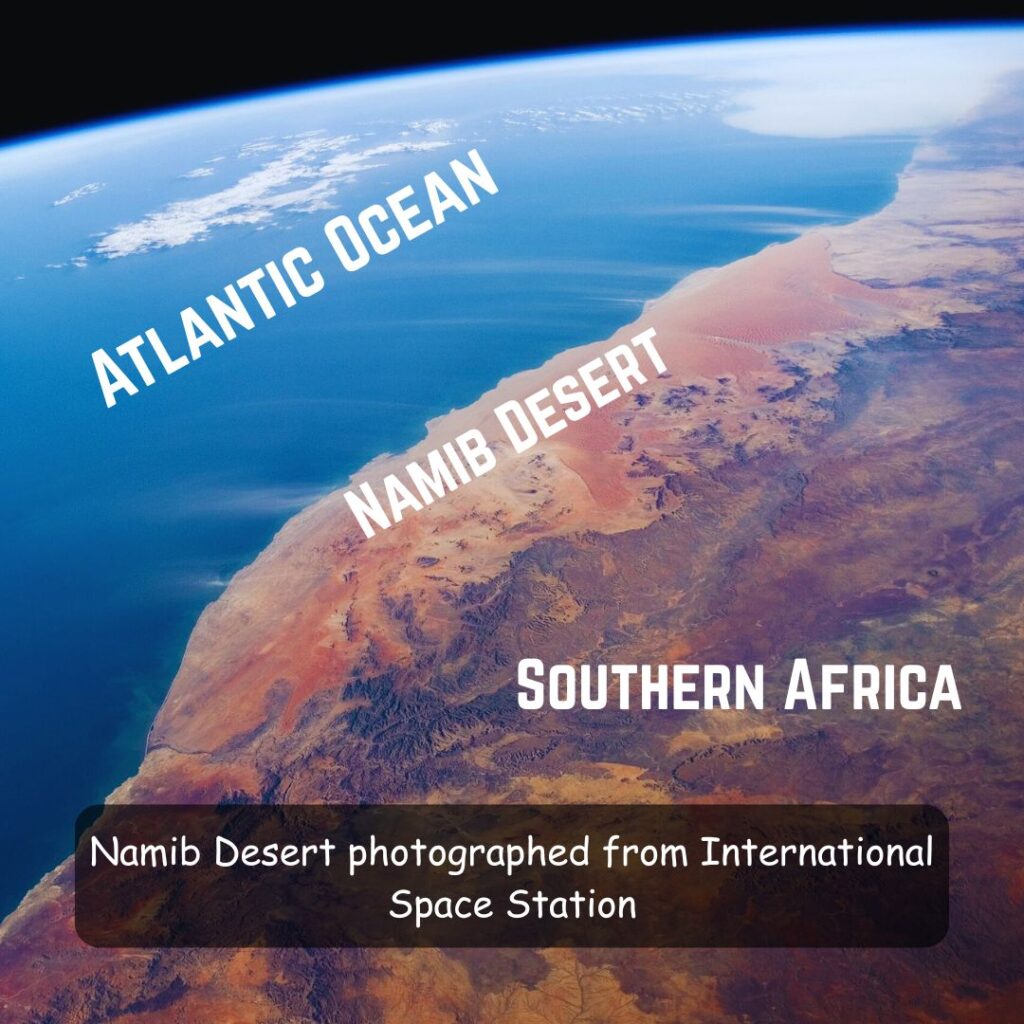
The Namib Desert is an ancient coastal desert that stretches along the Atlantic coast of Namibia, southwestern Angola, and northwestern South Africa. It extends for over 2,000 kilometers (1,240 miles). The Namib Desert is geographically diverse, featuring sand dunes, gravel plains, and rocky mountains.
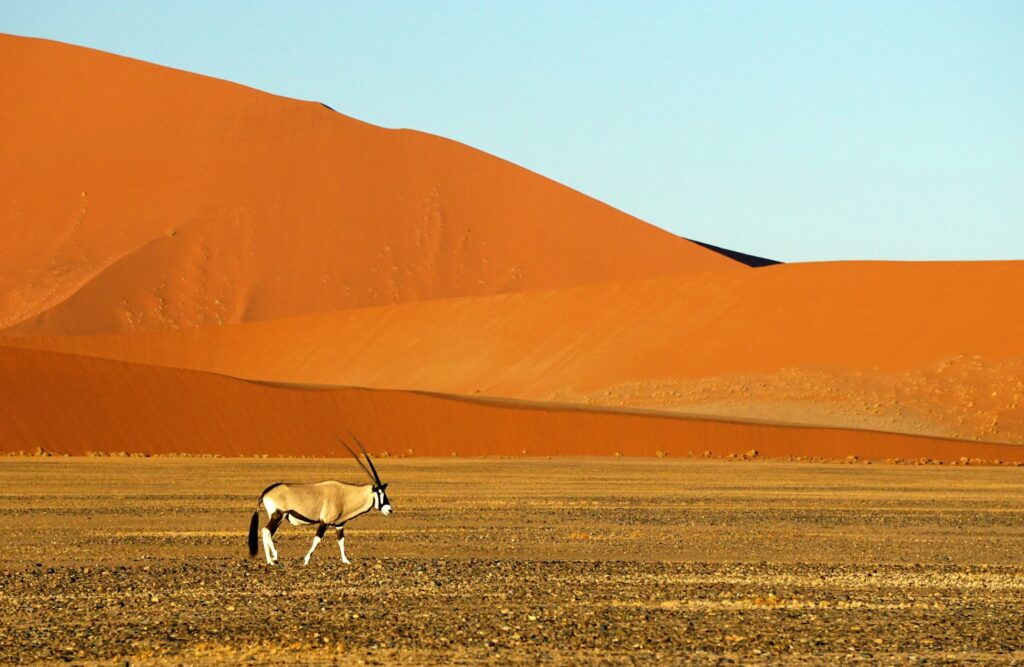
The Namib desert also gets fog, which brings moisture and supports life in this dry region. Temperatures in the Namib Desert vary widely. In winter, nighttime temperatures can drop below freezing, while in summer, daytime temperatures often exceed 40°C (104°F) and can sometimes reach close to 50°C (122°F).
3. Kalahari desert
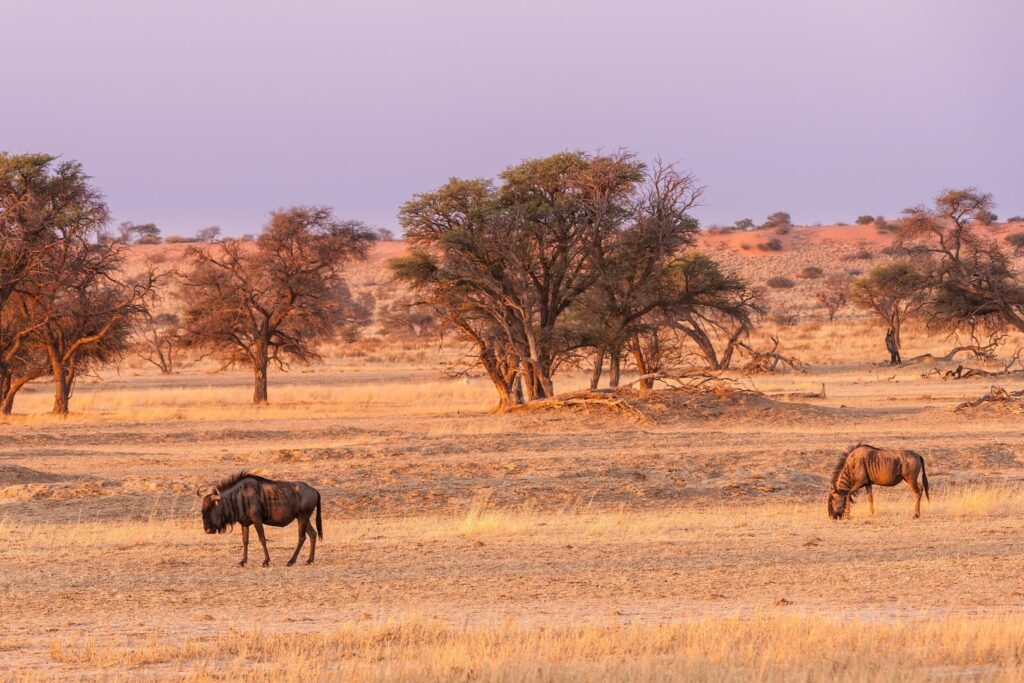
The Kalahari Desert is a vast region in Southern Africa, covering about 900,000 square kilometers. It is not a true desert, but rather a semi-arid savanna with variable rainfall and scattered vegetation. The Kalahari stretches across three countries: Botswana, Namibia, and South Africa. The climate is hot and dry, with summer temperatures exceeding 40°C (104°F) and winter nights sometimes dropping below freezing.
The main geographical features of the Kalahari are its red sand dunes, its salt flats, and its dry riverbeds that fill with water during the rainy season. The region is also known for its rich wildlife, including lions, cheetahs, antelope, meerkats, springboks, giraffes, and wildebeests.
Read more